B2C brands today face one of the toughest growth landscapes ever: fragmented customer journeys, rising CACs, and new retail media ecosystems reshaping where consumers discover and buy.
The solution isn’t just another channel, it’s building a unified GTM engine: a growth system where every channel, campaign, and data signal works together across the funnel.
What we’ll cover
What a unified GTM strategy looks like for B2C brands
How leading agencies and brands execute it
Where retail media fits into the mix
Tools and frameworks to operationalize it
How we at Linx help DTC and retail brands scale predictably
What is a unified GTM engine?
A unified GTM (Go-to-Market) engine aligns every stage of the consumer journey, from first exposure to repeat purchase and advocacy, into a single growth system.
Instead of siloed campaigns competing for budget, a unified funnel ensures that:
Ads (Meta, TikTok, YouTube, retail media) build awareness.
Content (social, SEO, influencers) nurtures trust.
Tracking tools (CDPs, pixel data, CRM) capture buying signals.
Conversion channels (email/SMS, ecom flows, DTC offers) close sales.
Retention loops (loyalty, referrals, community) extend LTV.
Agencies with strong DTC track records formalize this. Common Thread Collective’s “eCommerce Growth Equation” centers growth on four levers: new customer orders, AOV, contribution margin, and purchase frequency. The equation forces channel work to roll up into one P&L, not vanity metrics.
Sharma Brands popularized a creative-led approach: find an offer–angle–proof combo, validate it fast on Meta and TikTok, then scale into lifecycle and retail partners. Their case studies lean on modular landing pages, UGC, and CRO before spend scaling.
Tinuiti’s enterprise playbooks highlight unified measurement across paid search, paid social, retail media, and CRM, which is now table stakes for scaled DTC.
Why Fragmented GTM Fails
Many B2C brands run channels in silos: a Meta ads team optimizing for ROAS, a social team chasing engagement, and an email team running promos.
The issue?
Wasted spend on uncoordinated campaigns
Conflicting messages across touchpoints
Missed opportunities to retarget engaged prospects
No clear attribution between upper- and lower-funnel tactics
Research shows that full-funnel campaigns drive:
+45% ROI uplift vs. siloed campaigns
+52% incremental sales when upper or lower funnel tactics are layered into mid-funnel campaigns
The 7-part unified GTM blueprint
1) Market, offer, and proof
Define your hero jobs-to-be-done and moments of use.
Package a testable offer: starter kit, trial, subscription bonus, or limited bundle.
Collect proof: reviews, UGC, expert quotes, demos, and before/after shots. This will power ads, LPs, and CRM.
Landing system: one modular template per angle with sections you can swap: hook, social proof, demo, ingredients or build, FAQs, objections. CRO beats new ads more often than you expect.
2) Creative engine for Meta and TikTok
Build modular assets: hooks, demos, social proof, unboxings, comparisons, and problem–solution cuts.
On Meta, test Advantage+ Shopping Campaigns for scale and pair with a creative testing sandbox for new hooks. These campaigns automate targeting and placements and are now a common backbone for DTC scaling.
On TikTok, lean on Spark Ads and creator whitelisting so the content runs from the creator’s handle. Brands report downstream sales lifts that extend to Amazon and retail when tracked with Amazon Attribution or platform analytics.
Creative cadence: 5–10 new concepts monthly, 20+ variations. Kill quickly, scale winners, then refresh the hook to fight fatigue.
3) Creator and influencer system
Source creators who already make content in your category.
Brief for outcomes, not scripts: show the problem, show the product, show the result.
Repurpose winners across ads, PDPs, emails, and onboarding.
4) Search and shopping capture
Branded search to harvest demand created by paid social and creators.
Non-branded queries around problems and comparisons.
Merchant feeds tuned for reviews, price, availability, and schema.
5) Lifecycle: email and SMS as a second purchase engine
Core flows: welcome, browse abandon, cart abandon, post-purchase, win-back, review request, subscription onboarding if relevant.
Benchmarks vary by vertical, but Klaviyo’s 2024 benchmark report and State of Ecommerce show retention and automation driving outsized revenue share when flows are properly sequenced and personalized. Use their benchmarks to gauge lift and set realistic targets.
Layer SMS for timely nudges and time-sensitive drops. Attentive’s 2024 report details consumer opt-in behavior and conversion patterns that can refine cadence and offer mix.
Playbook: Treat CRM like paid. Test subject lines, hero blocks, proof order, and offers. Drive to tailored LPs, not the homepage.
6) Measurement that informs spend
Use a triangulation model:
Platform numbers for creative direction.
A first-party analytics layer for site behavior and cohorting.
A unified measurement tool that blends MMM, MTA, and incrementality so you can make portfolio decisions instead of channel guesses. Triple Whale and Northbeam both publish current guidance on combining MMM with testing to reduce blind spots.
For enterprise or mixed channels, consider Rockerbox for multi-touch that includes offline and retail media.
Sanity checks: MER (marketing efficiency ratio), new-customer contribution margin, 60- or 90-day payback, and second-order rate.
7) Retention and LTV compounding
Subscription UX, skip and swap options, and surprise-and-delight moments.
Post-purchase education that reduces returns and increases repeat.
Community and UGC challenges that feed the creative engine.
How Top Agencies & Brands Do It
The best agencies and brands don’t just run ads or pump out content. They engineer unified GTM engines where creative, data, and channels work in sync.
Here’s how they do it:
Top Agencies
CTC – Growth Equation
CTC (Common Thread Collective) focuses on contribution margin and purchase frequency rather than vanity metrics like top-line ROAS. Their dashboards force teams to optimize for profitable growth instead of chasing cheap clicks.
Takeaway: Build reporting around margin and repeat purchases, not just CAC.
Sharma Brands – Creative-First Playbook
Sharma pairs UGC-style creative with angle-specific landing pages. Each ad concept gets its own CRO-tested landing page before media scale.
Takeaway: Adopt the “angle page” pattern to maximize relevance and conversion.
Tinuiti – Unified Measurement
For larger brands, Tinuiti blends MMM (marketing mix modeling) with continuous testing. Even at smaller budgets, they recommend geo-lifts and holdout tests to validate results beyond platform ROAS.
Takeaway: Don’t rely on platform-reported numbers alone. Layer in testing.
Top Brands
Nike – Unified Brand Storytelling
Nike reinforces “Just Do It” across TV, retail, social, and digital ads. This cultural consistency ensures every touchpoint feels like the same brand.
Starbucks – Loyalty Engine
Every purchase (app, POS, in-store) feeds into a single rewards ecosystem. Offers are synced across email, push notifications, and in-store signage, driving habit loops.
Sephora – Omnichannel Personalization
Customer data unifies across online and retail. Store associates see wishlists and preferences on tablets. Ads and emails reflect browsing history.
Emerging Agencies – Retail Media + DTC Mix
Wpromote, Tinuiti, and others are making retail media (Amazon, Walmart Connect, Instacart) central. They integrate retail ads with social + search, ensuring retail touchpoints fuel DTC conversions.
Tools for a Unified GTM Engine
Awareness (TOFU)
Meta Ads, TikTok Ads, YouTube
Retail Media Display (Walmart Connect, Amazon DSP)
Influencer Platforms (Grin, AspireIQ)
Consideration (MOFU)
Retargeting (Google Display, Meta Custom Audiences)
Content Delivery (Klaviyo, Mailchimp, Attentive SMS)
Social Proof (Yotpo, Okendo, Bazaarvoice)
Conversion (BOFU)
Ecom Platforms (Shopify, Amazon, Instacart)
Paid Search (Google Shopping, Microsoft Ads)
Conversion Tools (Hotjar, Nosto, Rebuy)
Retention & Advocacy
Loyalty (Smile.io, LoyaltyLion, ReferralCandy)
CRM (HubSpot, Klaviyo)
Communities (Discord, Circle, Facebook Groups, Slack)
How we run a unified GTM at Linx
At Linx, we believe the winning brands in 2025 won’t be the ones with the biggest ad budgets, but the ones that integrate every touchpoint into a single growth engine.
Our approach:
Full-Funnel Mapping – Align TOFU, MOFU, BOFU, retention stages into one system.
Retail Media + DTC Sync – Ensure Amazon/Walmart media complements, not cannibalizes, DTC performance.
Content-First Growth – Use organic + influencer content to reduce CAC and fuel paid performance.
Signal-Based Outreach – Trigger campaigns based on shopper engagement (site visits, social interaction, retail cart abandonment).
Unified Measurement – Connect CDP + GA4 + retail dashboards for a single view of ROI.
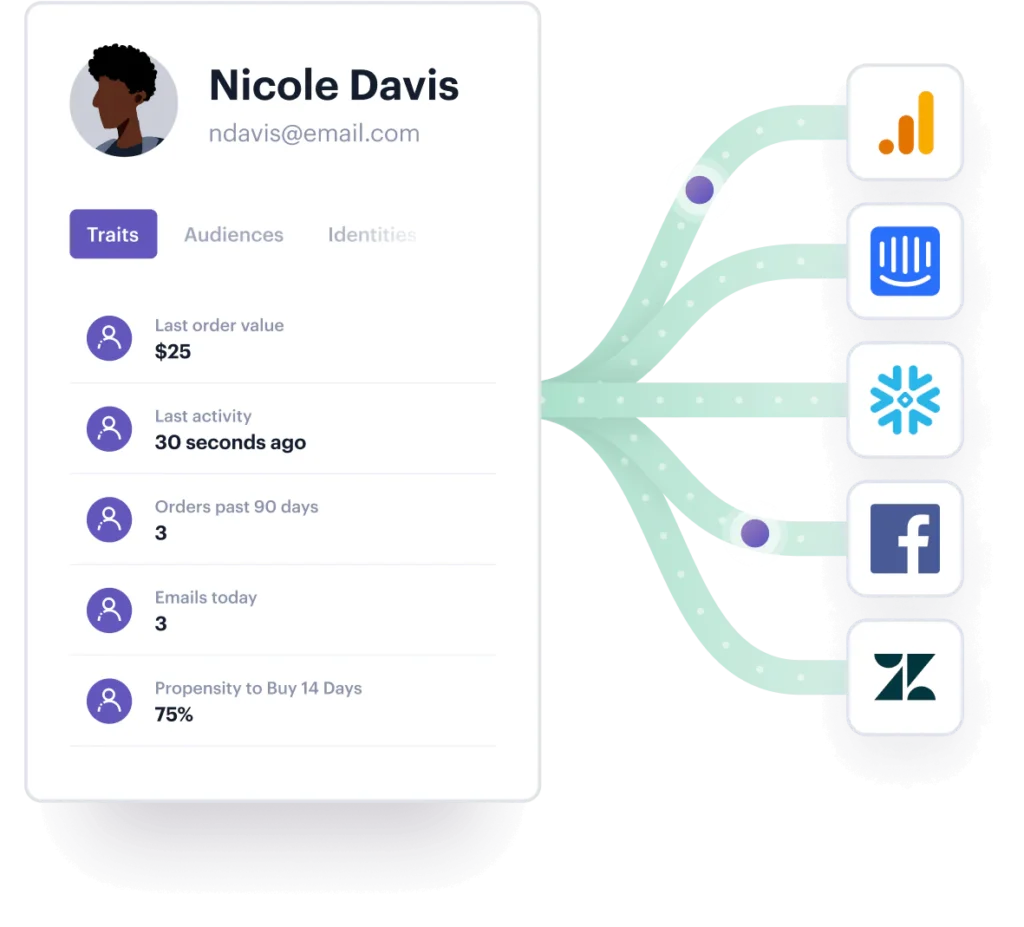
Source: Twilio Segment
Wrapping Up
A unified GTM engine is about making every channel work together.
Retail media aligns with DTC.
Content reinforces ads.
Loyalty programs extend the funnel beyond purchase.
When B2C brands unify their GTM, they get predictable revenue growth, stronger brand loyalty, and higher ROI .
At Linx, we help consumer brands build unified GTM engines that connect retail media, DTC, and content into one predictable growth machine. Let’s talk.